

Wall Graphics in Cumming, GA That Transform Your Space
Custom Wall Graphics and Murals for Branding and Visual Impact
Your walls are one of the most underused branding opportunities in your business. Signary Custom Signs and Graphics creates custom wall graphics in Cumming, GA designed to enhance your space, reinforce your brand, and create a memorable experience for customers and employees.
What Are Wall Graphics?
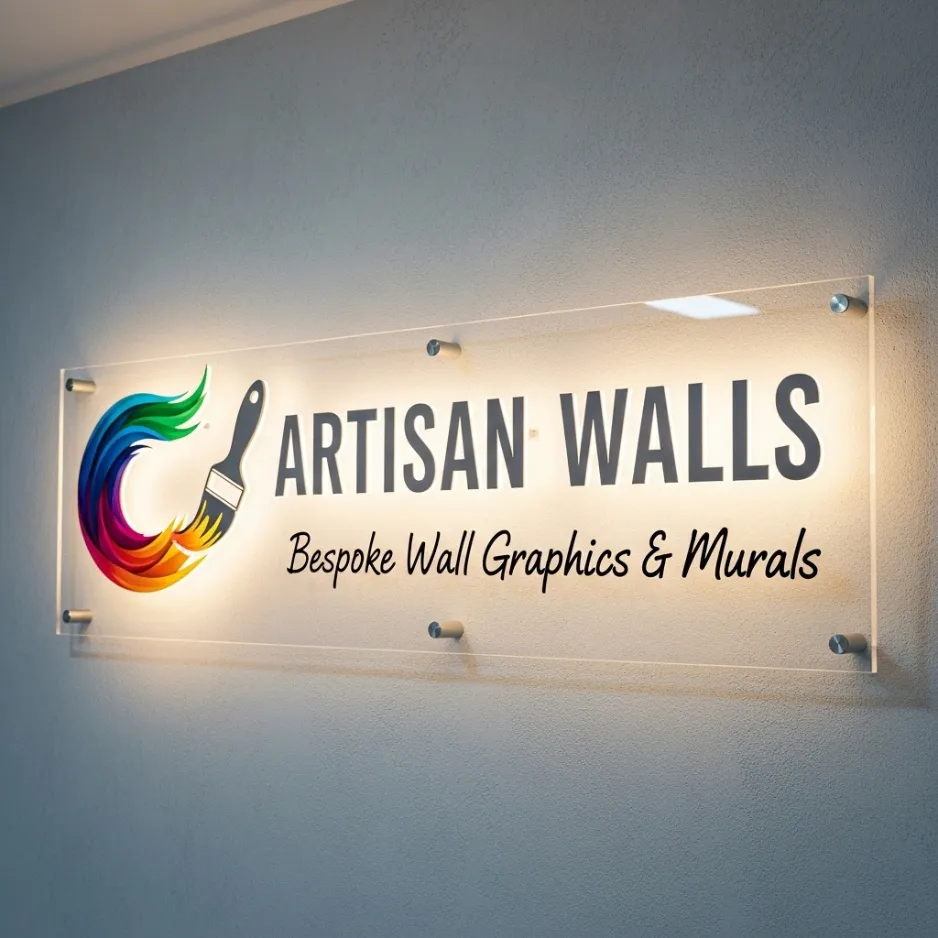
Wall graphics are custom designed visuals applied directly to walls to enhance branding, communication, and design within your space.
They can be used for:
Branding and messaging
Decorative elements
Informational displays
Creating immersive environments
Wall graphics allow you to turn blank walls into powerful visual assets.
Types of Wall Graphics

Wall Murals
Large scale graphics that create a strong visual statement

Logo and Brand Graphics
Display your logo and brand messaging prominently

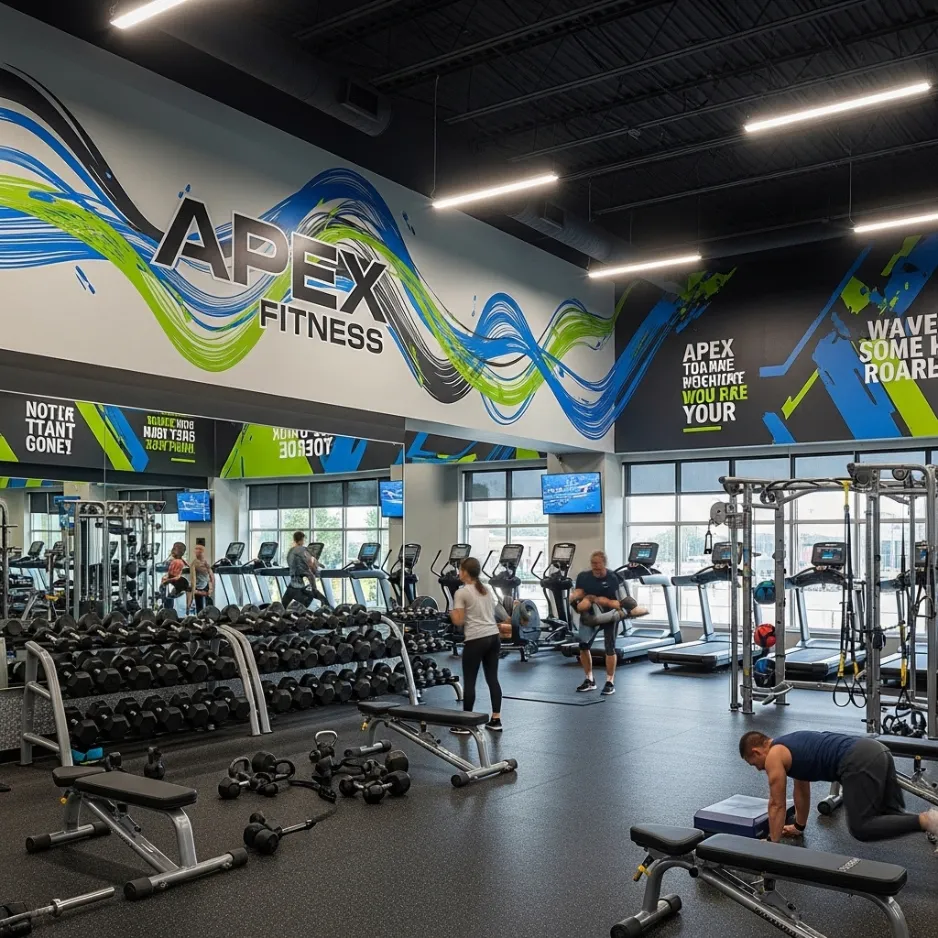
Motivational & Informational Graphics
Used in offices, gyms, and workspaces
Environmental Graphics
Design elements that enhance the overall space
Custom Wall Decals
Flexible and removable options for branding

Types of Wall Graphics
Outdoor signage plays a critical role in business visibility.
Wall Murals
Large scale graphics that create a strong visual statement
Logo and Brand Graphics
Display your logo and brand messaging prominently
Motivational and Informational Graphics
Used in offices, gyms, and workspaces
Environmental Graphics
Design elements that enhance the overall space
Custom Wall Decals
Flexible and removable options for branding
Who Uses Wall Graphics
Wall graphics are ideal for many types of businesses.
Corporate Offices
Reinforce branding and create a professional environment.
Medical and Healthcare Office
Create a calm and welcoming space for patients.
Retail Stores
Enhance the in-store experience and visual appeal.
Fitness Centers
Add energy and motivation to the space.
Schools and Community Spaces
Create engaging and informative environments.

Why Wall Graphics Matter
Enhances Brand Identity
Your space becomes an extension of your brand.
Improves Customer Experience
A well designed environment creates a better impression.
Maximizes Your Space
Turn unused walls into valuable visual assets.
Creates a Memorable Environment
Customers and clients are more likely to remember your business.
Custom Wall Graphic Design
Every space is different.
We design wall graphics based on:
Your brand identity
Your space and layout
Your audience
Visibility and placement
Materials and finishes
The goal is to create graphics that feel intentional and impactful.
Wall Graphics in Cumming, GA
We provide wall graphic solutions across:
Milton
Johns Creek
Gainesville
Cumming, GA
Forsyth County
Alpharetta
Roswell
We understand how to design graphics that fit your space and your goals.
Our Process

Consultation
We learn about your space and vision.

Design
We create custom graphics tailored to your brand.

Production
Your graphics are produced using high quality materials.

Installation
Professional installation ensures a clean and seamless finish.
Frequently Asked Questions
Are wall graphics permanent?
They can be either permanent or removable depending on the materials used.
Can wall graphics be customized?
Yes. Every graphic is custom designed for your space.
How long do wall graphics last?
Durability depends on materials and placement, but they are designed for long term use.
Can you install wall graphics in occupied spaces?
Yes. We work efficiently to minimize disruption.
✦ Our Services
Explore Related Sign Services
If you are looking for specific signage solutions, start here:

Indoor Signs in Cumming, GA
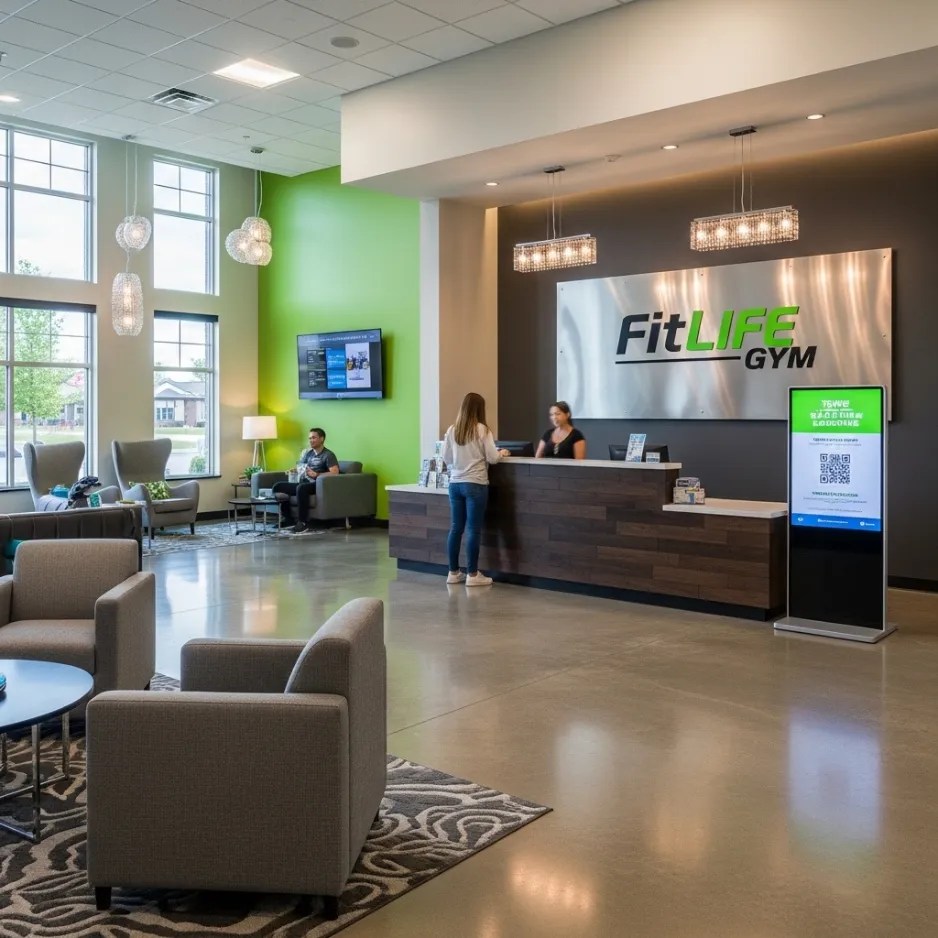
Lobby Signs in Cumming, GA

Custom Signs in Cumming, GA

Sign Installation in Cumming, GA
Trusted by Businesses Across Cumming and Forsyth County
Learn More About Interior Signage
What Is the Best Sign for a Business in Cumming, GA?
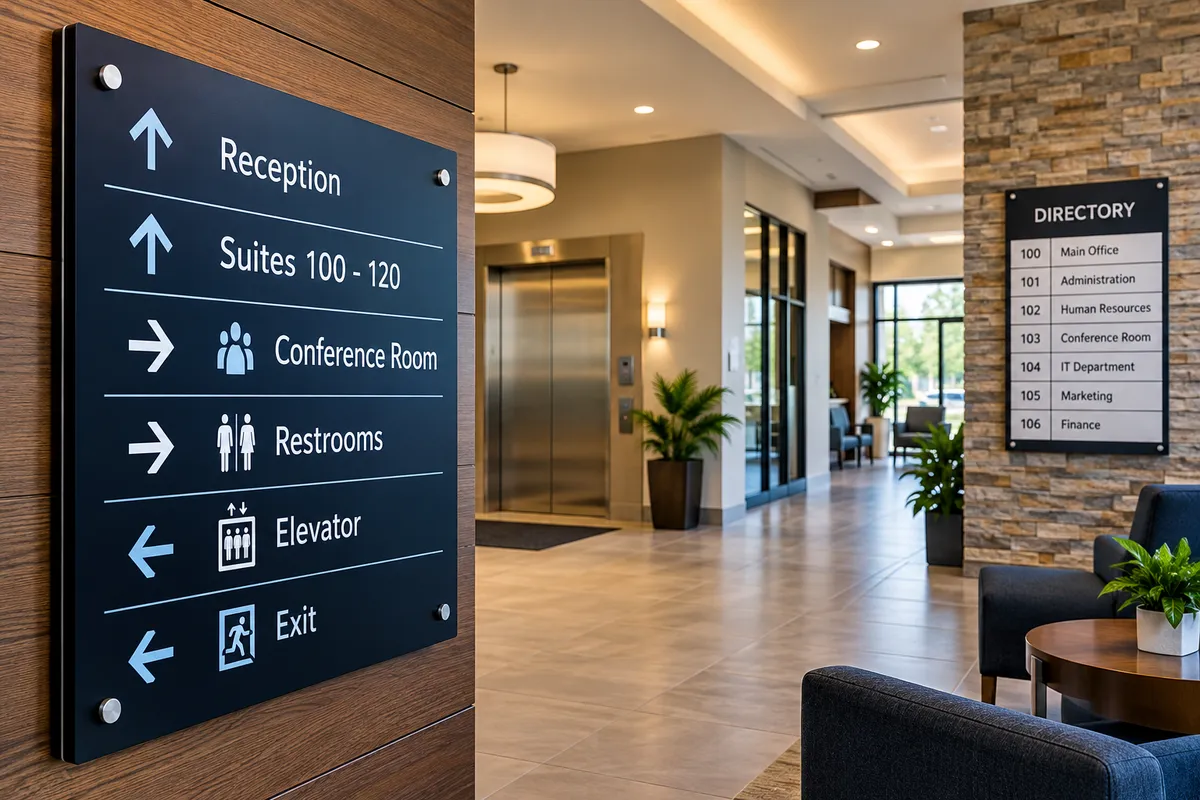
Wayfinding Signs in Cumming GA: A Complete Guide for Businesses
Wayfinding Signs in Cumming, GA: How to Help Customers Navigate Your Business with Confidence
When customers visit your business for the first time, finding the right entrance, office, department, or parking area should be simple.
But what happens when your building has multiple entrances, confusing hallways, or several businesses sharing the same property?
Without clear directional signage, visitors may waste time looking for their destination, ask employees for directions, or become frustrated before their appointment even begins.
That's where professional wayfinding signage makes a difference.
For businesses in Cumming, Dawsonville, Alpharetta, and throughout Forsyth County, Georgia, thoughtfully designed wayfinding signs can improve navigation, support accessibility, and create a more welcoming environment.
At Signary Custom Signs And Graphics, we help businesses plan and create custom signage solutions that make commercial spaces easier to navigate while maintaining a professional, consistent appearance.
What Is Wayfinding Signage?
Wayfinding signage is a system of signs that helps people identify their location, find destinations, and navigate buildings or commercial properties.
These signs guide customers, employees, patients, and visitors from one location to another.
Common types of wayfinding signs include:
Directional signs: Point visitors toward entrances, offices, departments, and other destinations.
Building directory signs: Display businesses, tenants, or departments within a property.
ADA signs: Identify certain rooms and spaces while meeting applicable accessibility requirements.
Room identification signs: Label offices, conference rooms, restrooms, and other areas.
Parking directional signs: Guide vehicles toward designated parking areas and entrances.
Floor identification signs: Help visitors identify floors and navigate multistory buildings.
Exterior wayfinding signs: Direct visitors between buildings, entrances, and parking facilities.
A well-designed wayfinding system connects these signs so visitors can follow a logical route from arrival to destination.
Why Are Wayfinding Signs Important for Businesses?
Your business signage does more than display information. It influences how customers experience your property.
Whether you operate a medical office, retail center, corporate building, school, or commercial facility, clear signage can make a meaningful difference.
1. Help Customers Find Their Destination Faster
Imagine a patient arriving at a medical office for an appointment.
The building has several suites, multiple hallways, and no clear directory near the entrance.
Instead of heading directly to the appointment, the patient must stop and ask someone for directions.
Now imagine the same building with a clearly visible directory, directional arrows, and properly labeled offices.
The experience becomes much easier.
Custom directional signs help visitors locate important destinations without unnecessary confusion.
2. Create a Professional First Impression
Customers begin forming an impression of your business before speaking with an employee.
Outdated, mismatched, or poorly positioned signs can make an otherwise attractive property feel disorganized.
Consistent signage helps create a more polished environment.
For example, a corporate office in Alpharetta may use matching wall signs, office identification signs, and lobby directories to maintain a consistent visual identity.
The result is a more cohesive appearance throughout the building.
3. Reduce Repeated Questions for Employees
How often do employees have to answer questions such as:
Where is Suite 205?
Which entrance should I use?
Where are the restrooms?
How do I find the conference room?
Where is visitor parking?
When visitors repeatedly ask the same questions, the building may need clearer signage.
Properly placed directional signs can reduce interruptions and allow employees to focus on their primary responsibilities.
4. Support Accessibility
Accessible signage is an important consideration for many commercial properties.
Depending on the location and purpose of the sign, applicable ADA standards may address:
Raised tactile characters
Braille
Character size and spacing
Non-glare finishes
Visual contrast
Mounting height
Sign placement
Not every wayfinding sign has the same ADA requirements.
For example, signs identifying certain permanent rooms and spaces generally have different requirements from ordinary directional signs.
Businesses should evaluate applicable accessibility requirements during the planning process rather than treating them as an afterthought.
What Types of Businesses Need Wayfinding Signs?
Wayfinding signage is useful for many different commercial environments.
Medical Offices and Healthcare Facilities
Patients and visitors need to locate reception areas, exam rooms, laboratories, restrooms, and exits.
Clear signage can make healthcare facilities easier to navigate, especially for first-time visitors.
Office Buildings and Corporate Facilities
Multi-tenant office buildings often require lobby directories, suite identification signs, floor directories, and directional signage.
A coordinated system helps visitors find the correct business without searching through multiple hallways.
Retail Centers and Shopping Plazas
Shopping centers may benefit from parking signs, tenant directories, pedestrian directional signs, and building identification signs.
These signs help customers identify businesses and locate entrances.
Schools and Educational Facilities
Schools, training centers, and educational campuses often have numerous classrooms, administrative offices, and shared facilities.
Directional signage can help students, parents, staff, and visitors move throughout the property.
Apartment Communities and Commercial Properties
Apartment buildings, condominium developments, and commercial properties can use directional signs to identify building numbers, parking areas, leasing offices, and amenities.
For properties with multiple buildings, a consistent signage system is particularly valuable.
How to Design Effective Wayfinding Signs
Not all directional signs are equally effective.
A sign can look attractive but still be difficult to understand if the lettering is too small, the arrows are confusing, or the installation location is poorly chosen.
Here are several important factors to consider.
Choose Readable Fonts and Letter Sizes
Visitors should be able to understand important information quickly.
Simple, legible lettering is generally more effective than highly decorative fonts for directional signs.
Letter size should also account for viewing distance.
A sign viewed from across a large lobby may require larger lettering than a room identification sign viewed from a few feet away.
Use High-Contrast Colors
Color contrast helps information stand out.
For example, dark lettering against a light background can provide strong readability.
Businesses can also incorporate brand colors into their signage while maintaining sufficient contrast.
Keep Information Simple
A directional sign should communicate the information visitors need at that location.
Too much text can make it difficult to identify the correct destination.
Clear arrows, recognizable symbols, and concise labels often work better than lengthy instructions.
Maintain Consistent Design
Wayfinding signs should use consistent terminology, fonts, colors, and directional symbols throughout the property.
For example, if one sign refers to a location as the "Main Office," subsequent signs should use the same name.
Consistency makes the signage system easier to follow.
Install Signs at Important Decision Points
Even a professionally designed sign may not be helpful if visitors cannot see it when they need it.
Consider installing signs near:
Main entrances and reception areas
Hallway intersections
Elevators and stairwells
Parking lot entrances
Building directories
Department entrances
Major changes in direction
Effective wayfinding signage provides information before visitors have to decide which direction to take.
Interior vs. Exterior Wayfinding Signs: What's the Difference?
Both interior and exterior wayfinding signs serve the same general purpose, but their design requirements can differ.
Interior Wayfinding Signs
Interior signs guide visitors once they enter a building.
Examples include office directories, restroom identification signs, room numbers, and hallway directional signs.
These signs are commonly made from materials such as acrylic, aluminum, PVC, and other suitable substrates.
Exterior Wayfinding Signs
Exterior signs help visitors navigate parking lots, building entrances, commercial developments, and larger properties.
Common examples include:
Post and panel directional signs
Parking identification signs
Building identification signs
Monument-style directional signs
Entrance and exit signs
Exterior signage should be designed with weather exposure, visibility, mounting conditions, and applicable local sign regulations in mind.
For commercial properties in Cumming and Forsyth County, it is also important to determine whether proposed exterior signage requires local approval or permits.
How Much Do Custom Wayfinding Signs Cost in Cumming, GA?
The cost of wayfinding signage depends on the type of sign, materials, dimensions, quantity, and installation requirements.
For example, a small interior room identification sign will typically involve different materials and installation requirements than a large exterior directional sign.
Factors that influence pricing include:
Overall sign dimensions
Acrylic, aluminum, PVC, or other material selections
Single-sided or double-sided construction
Custom graphics and branding
ADA-related fabrication requirements
Mounting hardware and installation method
Number of signs ordered
Exterior installation and permitting requirements
For businesses planning multiple signs, evaluating the entire property before fabrication can help establish consistent designs and reduce unnecessary revisions.
The best way to determine the cost is to request a custom signage estimate based on your facility's needs.
When Should a Business Update Its Wayfinding Signs?
Not sure whether your current signs need improvement?
Consider reviewing your signage if:
Customers regularly ask for directions.
Your building has added new tenants or departments.
Existing signs are faded, damaged, or outdated.
You have remodeled or expanded your facility.
Your business has changed its branding.
Visitors frequently enter through the wrong entrance.
Your property has inconsistent room or suite identification.
Temporary paper signs have become permanent fixtures.
These situations may indicate that your property could benefit from a more coordinated wayfinding system.
Custom Wayfinding Signs in Cumming, Dawsonville, and Alpharetta, GA
Businesses throughout North Georgia have different signage needs.
A medical office in Cumming may require ADA room signs and hallway directions.
A commercial property in Dawsonville may need exterior directional signs and building identification.
A corporate office in Alpharetta may benefit from branded lobby directories and suite identification signs.
At Signary Custom Signs And Graphics, we work with businesses to develop signage solutions based on their property layout, branding, and practical requirements.
Our custom sign solutions include:
Interior directional signs
Exterior wayfinding signs
ADA room identification signs
Office and building directories
Custom dimensional letters
Building identification signs
Post and panel signs
Monument signs
Commercial wall signs
From initial consultation and design coordination through fabrication and installation, our goal is to help businesses create signage that is functional, attractive, and appropriate for their property.
Frequently Asked Questions About Wayfinding Signs
What is the purpose of wayfinding signage?
Wayfinding signage helps people navigate unfamiliar buildings and properties by identifying destinations, providing directions, and displaying location information.
Are wayfinding signs required to be ADA compliant?
Some signs must meet applicable ADA requirements, depending on their purpose and location. Signs identifying certain permanent rooms and spaces generally require specific accessibility features, while directional and informational signs may have different standards.
What materials are used for custom directional signs?
Common materials include aluminum, acrylic, PVC, and other sign substrates. The best material depends on whether the sign is installed indoors or outdoors, its intended appearance, and the mounting requirements.
Can wayfinding signs match my company's branding?
Yes. Custom wayfinding signs can incorporate your business colors, typography, logo, and visual identity while maintaining readability and applicable accessibility standards.
Do exterior directional signs require permits in Forsyth County, GA?
Permit requirements depend on the sign's type, size, location, and the jurisdiction overseeing the property. Businesses should confirm applicable requirements with the local permitting authority before installation.
Where can I get custom wayfinding signs in Cumming, GA?
Signary Custom Signs And Graphics provides custom commercial signage solutions for businesses in Cumming, GA, and surrounding communities, including Dawsonville and Alpharetta. Businesses can request a consultation to discuss their wayfinding signage needs.
Make Your Business Easier to Navigate with Signary Custom Signs And Graphics
A well-organized property should be easy for customers, employees, and visitors to navigate.
From the parking lot to the reception desk, every sign should help people understand where they are and where they need to go.
Whether you need a single building directory or a coordinated wayfinding signage system, choosing the right signs can improve your property's appearance and make navigation easier.
Signary Custom Signs And Graphics helps businesses in Cumming, Dawsonville, Alpharetta, Forsyth County, and surrounding North Georgia communities with custom commercial signage solutions.
Looking for custom wayfinding signs in Cumming, GA?
Visit Signary Custom Signs And Graphics to request an estimate and discuss your signage project.

Ready to Transform Your Space with Wall Graphics?
We create custom wall graphics that enhance your environment and strengthen your brand.

Custom signs designed, fabricated, and installed for businesses across Cumming, GA and Forsyth County.
Signary Custom Signs And Graphics is operated by Ayakn Group
Copyright 2026. Signary Custom Signs And Graphics . All rights reserved.